Sold art, sculpture, photography and objets d’artPublished monthly

deployed.works

No. 1 · November 2026 · Preview edition

The acquisition issue

November’s sales run from Art Toronto and the ADAA Fair in New York to Paris Photo, Christie’s sale of the Roger Therond collection in Paris and Dorotheum’s modern art auction in Vienna. Three dispatches and three paintings from the archive trace the public records that survive a change of hands.

3 dispatches · 24 works sold · 5 sellers · 4 countries · 4 media · 5 published prices

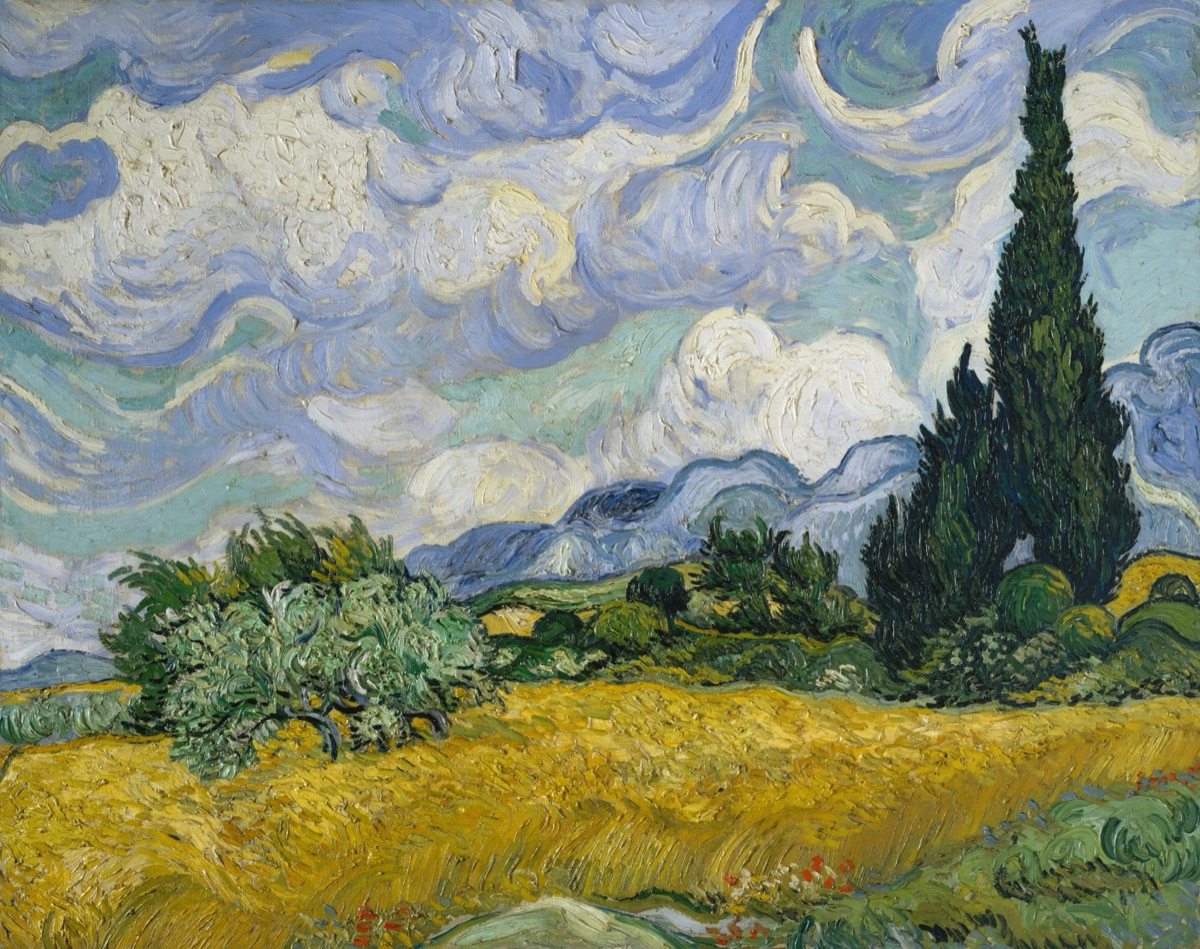
Dark cypresses rise above a golden wheat field beneath swirling blue clouds.
Vincent van Gogh, 1889 · Image courtesy of The Metropolitan Museum of Art, New York · Public domain · Image source ↗

From the editors

What survives a sale

Most writing about the art market gathers at the threshold. Preview essays describe paintings while they still hang on a dealer’s stand; auction notes rehearse estimates weeks before anyone raises a paddle. Once a work actually changes hands, the prose usually thins to a press release or disappears altogether. Yet the transfer itself is the decisive moment: the point at which private admiration hardens into custody, money or institutional obligation.

This journal exists to read those moments properly, and to keep two jobs distinct. Our sales library is a permanent ledger: dry by design, strict about what a source proves and content to leave a price blank when the record is silent or ambiguous. The monthly issue you are reading has a different task. Here we set the month’s transactions side by side and ask what kind of evidence each corner of the trade leaves behind.

November offers an unusually clear cross-section across four cities. Within seventeen days, a 1914 modernist canvas unexhibited since 1936 multiplied its upper estimate sevenfold in Vienna; a veteran French press editor’s photographs met two markedly different receptions under the hammer in Paris; an American symbolist painting left a New York booth behind an unpublished settlement; and a Toronto gallery posted seventeen red dots without a single figure attached. Taken singly, those are catalogue entries. Taken together, they show how art changes custody now.

The Editors · November 2026

On the cover · Museum acquisition

Wheat Field with Cypresses

Vincent van Gogh

The Metropolitan Museum of Art · Museum purchase, New York · 1993

Saint-Rémy to Fifth Avenue: how philanthropy puts a painting beyond price

Vincent van Gogh painted Wheat Field with Cypresses at the asylum in Saint-Rémy in the summer of 1889, locking two restless movements into a single frame: the pale gold grain surging sideways across the foreground and the dark pair of cypresses rising like a flame against rolling Provençal cloud. For more than a century the canvas belonged to the world of private ownership and succession, capable in principle of returning to the market whenever a family or estate chose to part with it.

That possibility closed in 1993, when The Metropolitan Museum of Art entered our New York collection by acquiring the picture with funds provided by the Annenberg Foundation. On the gallery wall and in the museum’s register, a transaction that would have commanded headlines in any evening saleroom is compressed into seven words and an accession number: Purchase, The Annenberg Foundation Gift, 1993 (1993.132). No hammer figure is posted; none needs to be.

We place the canvas on the cover of our opening issue because museum acquisitions mark the quiet terminus toward which so much of the trade eventually bends. Saleroom records measure urgency: two bidders in a room on a single night. An accession record measures permanence. It tells us not what the buyer paid, but who made the work public and when it ceased to be for sale.

“Once an acquisition credit replaces a price tag, the market story ends and the public life of the picture begins.”

Inspect the permanent record →

Saleroom & fair dispatches

Saleroom dispatch · Vienna

Ninety years out of public view

At Dorotheum, a 1914 Max Oppenheimer painting unexhibited since 1936 cleared seven times its upper estimate and demonstrated what genuine scarcity still does to a pre-sale bracket.

Auction estimates work best when a saleroom has recent comparables to lean on. They fail, sometimes decisively, when a picture returns after nearly a lifetime out of view. On 17 November in Vienna, Dorotheum brought Max Oppenheimer’s 1914 oil Das Hess-Quartett. Streichquartett I to the rostrum with an upper estimate of €500,000. The canvas had not been exhibited in public since 1936. When bidding closed in Palais Dorotheergasse, a telephone buyer had carried it to €3,550,000 including buyer’s premium and VAT, setting an auction record for the Viennese modernist known as Mopp.

The picture catches four string players in fractured Cubist-Futurist planes, bows and fingers rhyming across a compressed diagonal so that chamber music becomes visible geometry. Painted on the eve of the First World War, it belongs to the brief Viennese moment when expressionist tension met Parisian formal rigour, and its nine-decade absence from public walls meant no living collector had been offered a comparable musical composition by the artist.

What made the Vienna session instructive was that competition was not confined to a single principal lot. In the same sale, Egon Schiele’s 1916 gouache and watercolour Porträt eines Soldaten advanced past a €160,000–€250,000 estimate to reach €442,000, while Renée Sintenis’s 144-centimetre bronze Große Daphne (conceived in 1930 and cast after 1945 by H. Noack in Berlin) more than doubled its low estimate at €390,000. Across painting, paper and bronze, long-withheld Central European works with clear provenance met sustained bidding.
Saleroom & fair dispatch · Paris

Two halves of a bicentenary

Between Christie’s dispersal of the Roger Therond collection and the aisles of Paris Photo, one November week exposed two incompatible dialects of photographic value.

Mid-November in Paris belongs to photography, and photography’s bicentenary sharpened the contrast between its two main marketplaces. At Christie’s Paris on 13 November, works assembled by Roger Therond, the longtime Paris Match editor who collected both nineteenth-century monuments and Surrealist darkroom experiments, tested the upper tier of the auction market. Dora Maar’s circa-1935 gelatin silver montage Sans titre (Mannequin-Étoile) hammered at €310,000 and reached €396,800 with premium, an auction benchmark for the artist. Yet in the same evening room, Gustave Le Gray’s 1867–68 album of fifty albumen prints made in Upper Egypt for the sons of Vice-Roi Ismaïl Pasha hammered at €600,000 (€768,000 with fees), below its €800,000 low estimate before premium.

The pairing is a lesson in reading published numbers with care. Seven hundred and sixty-eight thousand euros is the larger sum on paper, yet the Maar print carried the competitive momentum of the night while the nineteenth-century royal album required a reserve adjustment below its pre-sale bracket. Without the split between hammer and premium reported by L’Art de la photo, a cursory summary would miss the distinction altogether.

Walk across Paris to the fairground at Paris Photo and even that degree of numerical clarity disappears. New York dealer Bruce Silverstein parted with two architectural photographs by Ahmet Ertuğ, including his 2023 pigment print of Yale’s Beinecke Rare Book and Manuscript Library. The published fair report cites “$35,000” in connection with the two works without specifying whether each print carried that figure or the pair shared it. In an essay we can note the ambiguity; in our permanent register, the price column stays blank rather than guess.

Fair dispatch · New York & Toronto

The asking price and the red dot

At the Park Avenue Armory and Art Toronto, two galleries documented collector demand while guarding opposite halves of the transaction.

Private fair sales enter the historical record sideways. Unlike an auction house, a dealer has no obligation to publish what a client ultimately wired, and observers working the aisles must piece the trade together from wall labels, booth conversations and post-fair checklists. Two North American fairs this month show the two classic forms that partial disclosure takes.

At the ADAA Fair in New York, Jonathan Boos placed Agnes Pelton’s 1932 painting The Well of Peace, a quiet composition from the years after the American symbolist settled in Cathedral City, California. Press reporting from the Armory recorded the booth’s $2.4 million asking price alongside news of the sale, while leaving the agreed settlement unstated. The asking figure establishes the bracket in which Pelton’s mature canvases are now offered; it does not establish whether an institutional discount or private negotiation altered the final invoice.

North of the border in Toronto, Roberts Gallery took the opposite path at Art Toronto, leaving its online exhibition checklist live with explicit sold markers across seventeen works. No prices appear, yet the breadth of what found buyers is unusually clear: historical Canadian works on paper by Arthur Lismer (Oxen Cart, circa 1920s) and Carl Schaefer (Rubber Plant, 1931), mid-century Toronto streetscapes by Albert Franck and Newfoundland oils by Alan C. Collier, alongside 2026 studio paintings by Bewabon Shilling, who sold three canvases from the stand, and Eliza Kożurno. Where New York offered an asking figure without a confirmed settlement, Toronto offered a complete map of collector taste without a single dollar sign.

From the archive

Three paintings, three paper trails: a museum purchase, an evening sale and an acquisition made almost a century ago.

Every issue of deployed.works pairs the month’s contemporary ledger with a small group of earlier records from the library. Seen together, these three New York transfers demonstrate how differently a canonical canvas leaves its mark on the public archive depending on who acquires it. René Magritte’s 1954 L’empire des lumières, dispersed from Mica Ertegun’s estate at Christie’s New York in November 2024, enters the public ledger through a single clearing figure: USD 121,160,000.

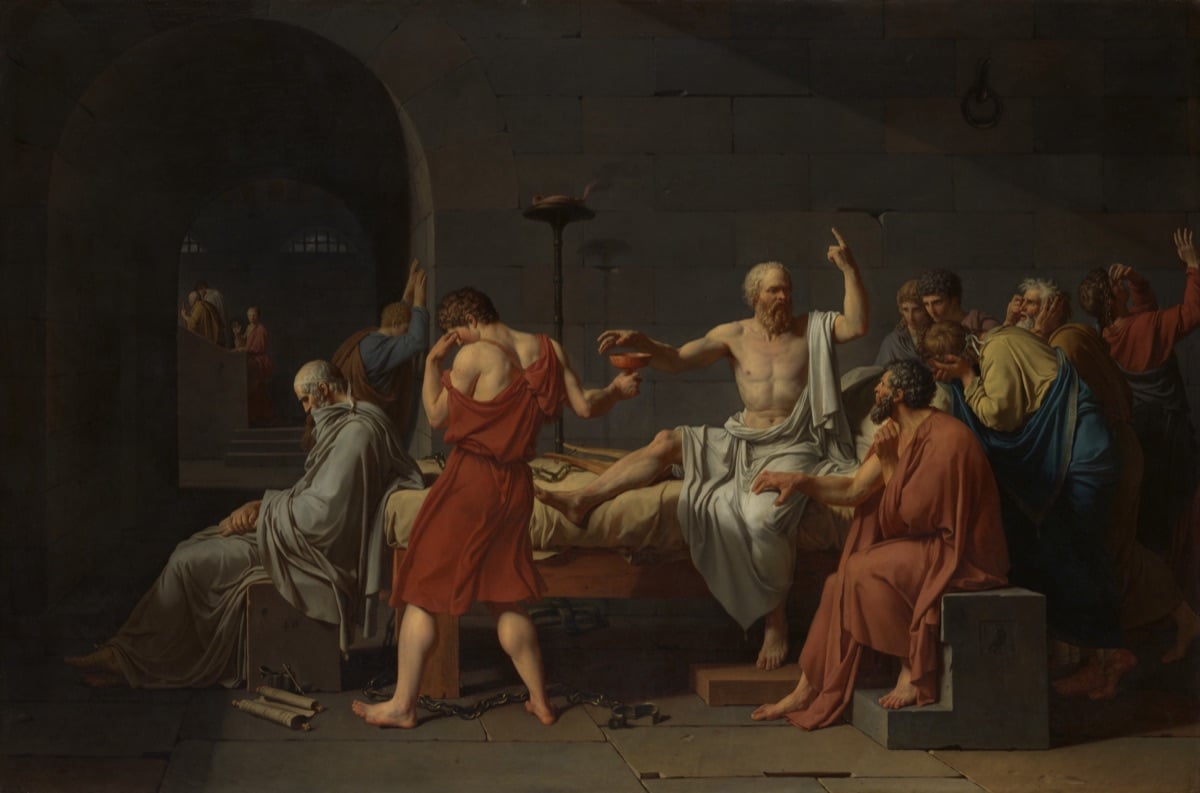
Turn to the museum walls on Fifth Avenue and the numbers disappear in favour of civic lineage. Jacques Louis David’s The Death of Socrates (1787) entered The Met in 1931 through the Catharine Lorillard Wolfe Collection and the Wolfe Fund, anchored permanently by accession number 31.45; Vincent van Gogh’s Wheat Field with Cypresses joined it sixty-two years later through the Annenberg Foundation Gift. One kind of record measures the clearing price of two paddles on a Tuesday night; the other records the year a picture stepped out of commerce altogether.

The November 2026 register

Every gallery sale, fair checklist entry and auction result documented for November 2026 appears below by medium, in the exact terms established by its source. For historical records across all nineteen countries, nine city collections and downloadable CSV data, visit the sales library.

Painting 17

Eliza Kożurno

Sirens

Acrylic on canvas, 2026

Roberts Gallery

Art Toronto

30 October–1 November 2026 · Canada

Price unpublished

Jacques Pilon

Sunlight

Mixed media on panel, 2026

Roberts Gallery

Art Toronto

30 October–1 November 2026 · Canada

Price unpublished

Works on paper 3

Carl Schaefer

Rubber Plant

Wood engraving on paper, 1931

Roberts Gallery

Art Toronto

30 October–1 November 2026 · Canada

Price unpublished

Arthur Lismer

Oxen Cart

Pencil on paper, circa 1920s

Roberts Gallery

Art Toronto

30 October–1 November 2026 · Canada

Price unpublished

Sculpture 1

Renée Sintenis

Große Daphne

Bronze with brown patina, height 144 cm; conceived 1930, cast after 1945 by H. Noack, Berlin

Dorotheum

Modern Art · Vienna

17 November 2026 · Austria

EUR 390,000

Photography 3

Dora Maar

Sans titre (Mannequin-Étoile)

Gelatin silver print mounted on card, image 29.7 × 16.9 cm; circa 1935

Christie’s Paris

Collection Roger Therond, une passion française: Evening sale · Paris

13 November 2026 · France

EUR 396,800

Explore all 135 records in the sales library →

Plates from the permanent library

Browse the permanent library